


In a world where questioning the safety of the COVID-19 shots can lead to professional ruin, cyber sabotage, and relentless smear campaigns, a group of courageous scientists continues to shine a light on alarming findings that regulators and pharmaceutical giants would prefer to remain hidden.
At the end of last year, I had the privilege of speaking with Kevin McKernan, Jessica Rose, and David Speicher. Their pioneering research on uncovering shocking levels of DNA contamination in the Pfizer and Moderna shots has not only challenged the safety narrative but also ignited a firestorm of backlash, including retraction attempts.
In a chilling escalation, recently the Daily Mail covered another bombshell scandal: a major oncology journal, Oncotarget, falls victim to a cyber attack mere days after publishing a damning systematic review linking COVID shots to cancer cases worldwide.
Below is a summary of the interview’s key revelations, where the parallels become stark: a coordinated effort to silence inconvenient truths about these experimental shots.
The Discovery: DNA Fragments in the Pfizer and Moderna Vaccine Vials
The interview begins with the origins of their research. Kevin McKernan, a genomics expert, first identified DNA contamination in vaccine vials back in April 2023. This led to a preprint paper in October 2023, which faced criticism for using anonymous samples.
Kevin McKernan: “We got some anonymous vials and did some initial work on those. The number one critique was that you don’t know the source, someone could have contaminated them. So we got in touch with David [Speicher] and Maria [Gutschi], who had vials from Canada that were all cold-chained and tracked.”
To address concerns, the team expanded their study, testing more vials and using advanced methods. Their findings showed DNA levels far exceeding regulatory limits: up to 600 times higher in some cases, particularly in Moderna vials.
The paper, titled “Quantification of Residual Plasmid DNA in SV40 Promoter Enhancer Sequences in Pfizer-BioNTech and Moderna Mod RNA COVID-19 Vaccines from Ontario, Canada,” was published in the peer-reviewed journal Autoimmunity on September 6, 2025.
Measuring DNA: qPCR vs. Fluorometry Explained
A key point of contention is how DNA is measured. Regulators often use qPCR (quantitative polymerase chain reaction), which targets specific DNA sequences, while the team used fluorometry for a broader view.
Sonia Elijah: “What is qPCR versus fluorometry? Regulators say there’s no issue because it’s under the 10 nanograms per dose limit.”
Kevin McKernan: “Fluorometry binds any double-stranded DNA. It will detect all sequences, including E. coli DNA. qPCR only targets specific pieces, like the kanamycin resistance gene, then extrapolates based on plasmid size but it misses E. coli DNA. David’s work showed varying levels across the plasmid: kanamycin or origin regions give one number, spike DNA is 100 times higher! You can’t assume uniform distribution. Regulators use qPCR on the kanamycin gene, which is lower than spike DNA, even though they have a spike assay.”
Fluorometry revealed higher contamination, even after treating samples with RNase to remove RNA interference. Critics argued about “crosstalk” (where dyes might detect RNA as DNA), but the team addressed this by validating their methods.
David Speicher: “Fluorometry is used to measure the RNA dose in the vaccines, so why frown upon it for DNA? We showed the dyes have low crosstalk, but we still used RNase to confirm.”
The SV40 promoter sequence, known for nuclear targeting and potential cancer risks, was a major concern. The team emphasized that lipid nanoparticles (LNPs) protect DNA, making the old 10 ng limit outdated.
The Retraction Saga: PubPeer (PubSmear), Retraction Watch, and Conflicts of Interest
Just 11 days after publication, the paper came under investigation due to comments on PubPeer (dubbed “PubSmear” by the group) and complaints from reviewer Rolf Marschalek. The team uncovered a network involving PubPeer, Retraction Watch, and individuals with ties to vaccine funding. Retraction Watch leaked a review PDF, revealing Marschalek as the author, despite his conflict of interest, as their paper critiqued his work (Kaiser et al., Vaccine 2025, 55:127022).
Jessica Rose: “We got an email saying the paper was under investigation because of a PubPeer commenter. Ironically, the comment was fabricated, a made-up quote from a referenced paper by Klinman et al. The probe was prompted by that and Rolf Marschalek. It’s ongoing; on the 22nd, they added an ‘under investigation’ note.
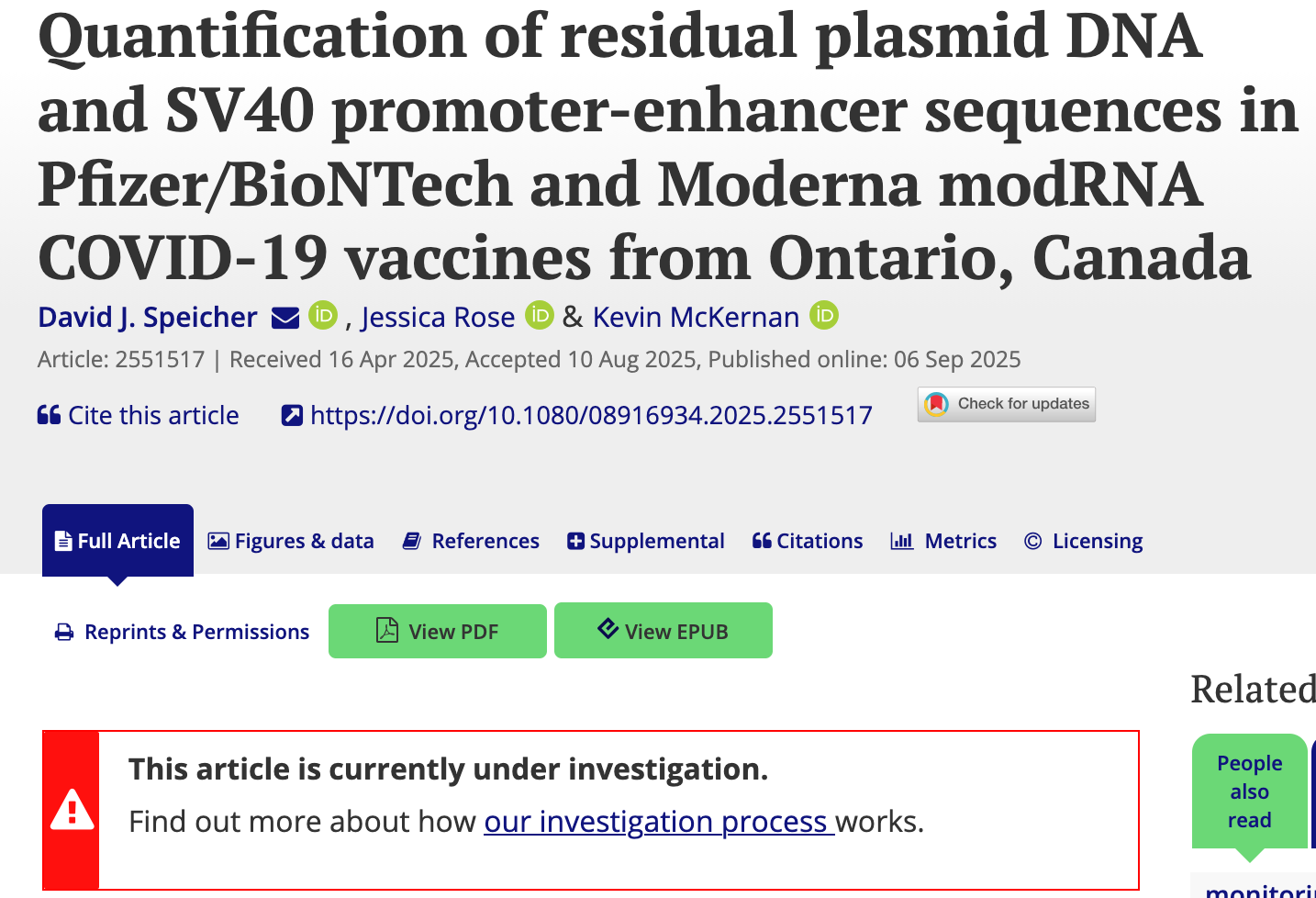
On November 20, Retraction Watch emailed us, accidentally revealing they’d received a review (against COPE guidelines) and attached another PDF. Metadata showed [Rolf] Marschalek as author. It’s a scandal! A network paying $5,000 for retractions, targeting narrative-challenging papers. We have timelines and receipts showing guideline violations.”
Kevin McKernan: “Marschalek works at DFG in Germany, which invested 30 million euros in BioNTech and 300 million in COVAX. He shouldn’t have reviewed us. He claimed he rejected the paper, but the editor said he only suggested modifications.”
Funding links were exposed: PubPeer and Retraction Watch share backing from the Arnold Foundation (Enron ties).
Kevin McKernan: “They’re in cahoots. Retraction Watch points to PubPeer’s anonymous complaints, allowing sock-puppet attacks, and some critics boast about payments for retractions.”
David Speicher: “All this is U.S. tax-deductible. It’s a cartel. PubPeer rips papers apart anonymously, Retraction Watch publicizes it.”
The team responded with a 22-page rebuttal, but the process remains opaque. They suspect ideological bias, as similar scrutiny is not applied to pro-vaccine studies.
A Pattern of Suppression: From Retractions to Cyber Sabotage
The scientists discussed systemic issues, including how peer review originated from intelligence-linked figures like Robert Maxwell (Ghislaine Maxwell’s father).
Kevin McKernan: “Peer review was a mechanism for influence capture. It’s a $40 billion market with better margins than Google, but it’s captured by pharma ads.”
They criticized regulators like Australia’s TGA for using flawed qPCR assays and ignoring spike DNA. Recent findings show methylated DNA and RNA-DNA hybrids, explaining high contamination.
Jessica Rose: “Every rock turned over reveals another issue. Attacks make our work better: they motivate us.”
The group proposes a decentralized alternative: peer-to-peer review on blockchain platforms like Nostr or Bitcoin, where reviewers are paid directly, bypassing gatekeepers.
Kevin McKernan: “Put papers on immutable ledgers. Pay reviewers the $3,000 journal fee instead. It creates competition and quality.”
They hope the new U.S. administration, including RFK Jr. and Sen. Ron Johnson, will investigate via RICO laws for racketeering.
The team is divided on retraction odds but united in resolve. Two follow-up papers are in progress, reinforcing their findings.
David Speicher: “It’s on the U.S. Congressional record. Retracting it now would expose bias.”
Jessica Rose: “If it gets retracted, it’ll raise a stink. We’re real scientists. We’ll keep publishing.”
Kevin McKernan: “Reproduction is key. Attacks breed distrust, but our data stands.”
As if to underscore the depths of this corruption, consider the recent cyberattack on the journal Oncotarget, which published a peer-reviewed paper by eminent Browns University cancer researcher Dr. Wafik El-Deiry and Tufts University cancer researcher Charlotte Kuperwasser.
Their study, released in early January 2026, reviewed global evidence from 2020–2025 linking COVID-19 vaccinations and infections to cancer signals, including 333 cases across 27 countries, where cancers were newly diagnosed or rapidly worsened shortly after vaccination.
Titled “Evaluation of Cancer Reports Following COVID-19 Vaccination and Infection,” the paper challenged the narrative around vaccine safety by highlighting potential oncogenic (cancer-causing) risks, such as “turbo cancers.”
Mere days after publication, Oncotarget was hit by a sophisticated cyberattack that took the entire site offline, effectively censoring the paper. The journal reported the incident to the FBI, describing it as a “malicious cyberattack.” The attacks disrupted online publications and website access, with the journal alleging possible involvement from individuals linked to PubPeer (the so-called “PubSmear” network) in hacking, offline disruptions, and search result manipulation.
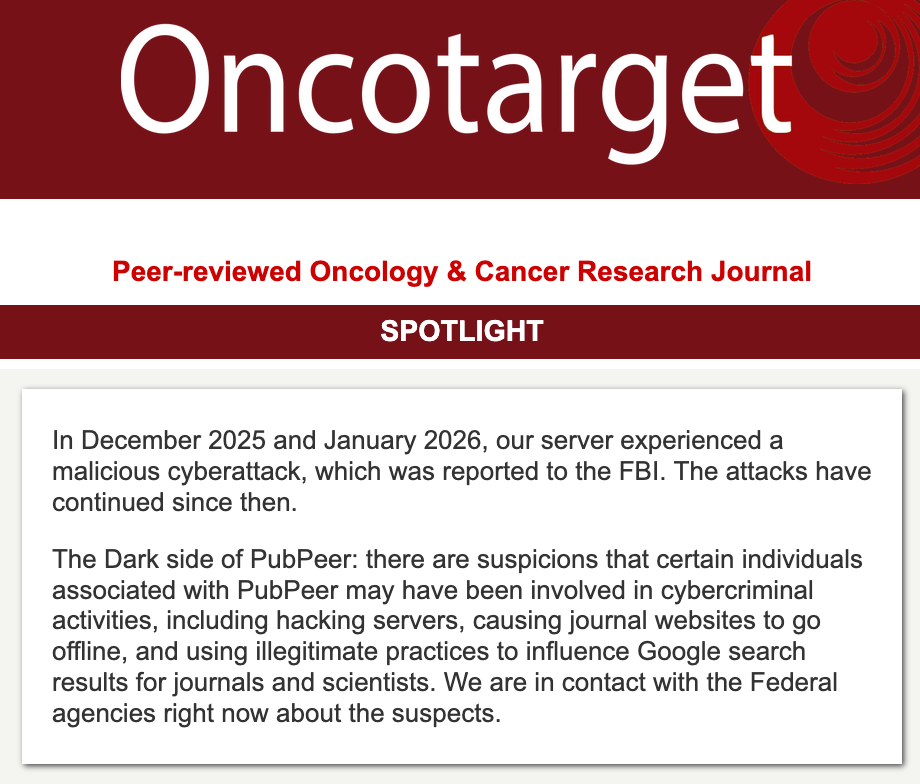
Dr. Wafik El-Deiry took to X to condemn the incident:
“Freedom of the Press is protected under the First Amendment of the US Constitution.
But Censorship is alive and well in the US and has come into medicine in a big awful way. The future is bleak if weaponized censorship in medicine continues to suppress any narratives that stand up to pharma, that expose inconvenient or suppressed truth.”
Critics, including those in the “PubSmear” network, have not only been quick to dismiss El-Deiry’s findings as unproven but have reportedly harassed him with daily attacks.
This is not isolated; it echoes the tactics we have seen in the suppression of vaccine-critical research. As with the interviewees’ work, this incident exposes how far powerful interests will go to protect the multi-billion-dollar mRNA technology narrative, resorting even to digital sabotage.
Furthermore, these disturbing findings on DNA contamination (including the SV40 promoter/enhancer sequences) do not stand in isolation. They directly intersect with the emerging evidence of cancer risks highlighted in Dr. El-Deiry’s groundbreaking review.
El-Deiry’s analysis of 333 temporal cancer cases post-vaccination strongly suggests that such contaminants warrant serious investigation as a plausible contributor to rapid-onset or progressive malignancies, often termed “turbo cancers.”
Together, these studies demand urgent, independent replication and scrutiny, far beyond the reach of smears, retractions, or cyberattacks.
If you appreciate the work I do as an investigative journalist, please consider supporting me with a paid subscription or buy me a coffee!


