


In May 2026, the UK Government published a 136-page report that reads less like an objective “evidence review” and more like an instruction manual for expanding state control over speech. “False and Misleading Information: An Evidence Summary and Map for Policy and Practice” was commissioned by the Government Office for Science and conducted as part of Behavioural Research UK (BR-UK).
Notably, BR-UK Co-Director Professor Susan Michie was a leading voice in Independent SAGE and the Government’s SPI-B group during COVID-19, consistently advocating prolonged lockdowns and behavioural controls that caused catastrophic social, educational and economic damage.
The report was authored primarily by academics from the University of Sheffield and the University of Edinburgh. It synthesises (or claims to) 228 academic papers while admitting that not all full texts were reviewed due to time constraints. Ironically, while the report identifies AI-generated content as a major and growing source of false and misleading information, the authors themselves used AI chatbots to help produce the summaries of the evidence they cite.
Its central argument is that “the spread of false and misleading information… is one of the most pressing challenges facing governments and societies worldwide.” The report underscores the scale of this concern by citing the World Economic Forum’s Global Risks Report (2026), which draws on the views of over 1,300 experts, leaders, and policymakers. Certain narratives, it argues, should be treated as “false and misleading information” capable of “causing harm,” and the state should prioritise tackling those harms rather than focusing on the speaker’s intent. Among the categories flagged are “anti-LGBTQ+ narratives,” including claims that schools and public authorities have been captured by gender ideology, or questions about biological males in women’s sport.
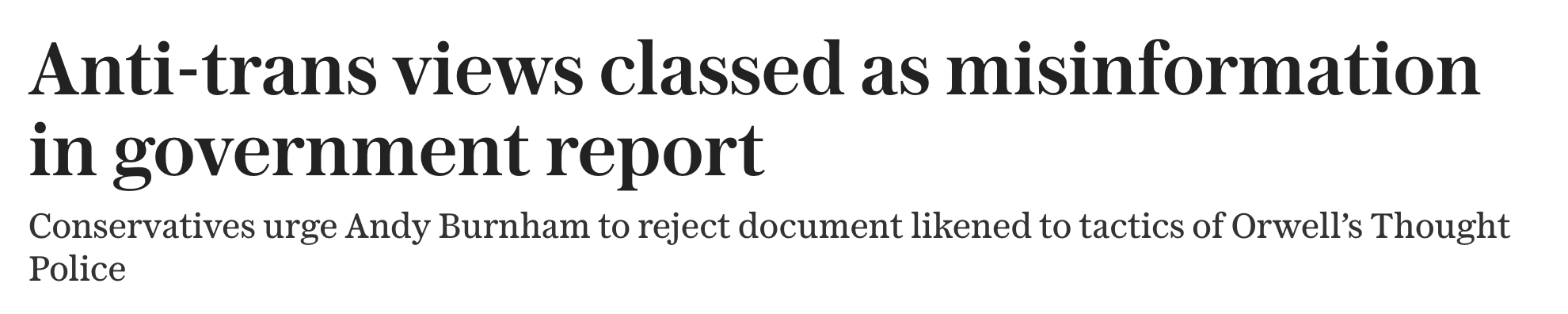
Source: The Telegraph
Other targets include electoral fraud claims, “institutional delegitimisation” of the EU, and immigration-related statements about migrant entitlements or crime. It is worth pointing out that while the report casts statements about migrant crime as potential “misinformation,” the Ministry of Justice has been working to block the publication of official data on convictions by nationality. Following a Freedom of Information request by the Centre for Migration Control for breakdowns of convictions (including violence, sexual offences, and other serious crimes) by nationality between 2018 and 2024, the Information Commissioner’s Office ordered the data to be disclosed. However, the MoJ appealed that ruling, prompting accusations of a cover-up.
The report’s own data underscores how central some of these topics have become. Table 4.3 (seen below) shows that “LGBTQ+ & gender issues” appeared in 43 out of 56 months (76.8% prevalence) and is classified as “High,” while “Immigration” featured in 50 out of 56 months (89.3%) and is labelled “Constant.” Health-related content (including COVID-19) was present every single month.
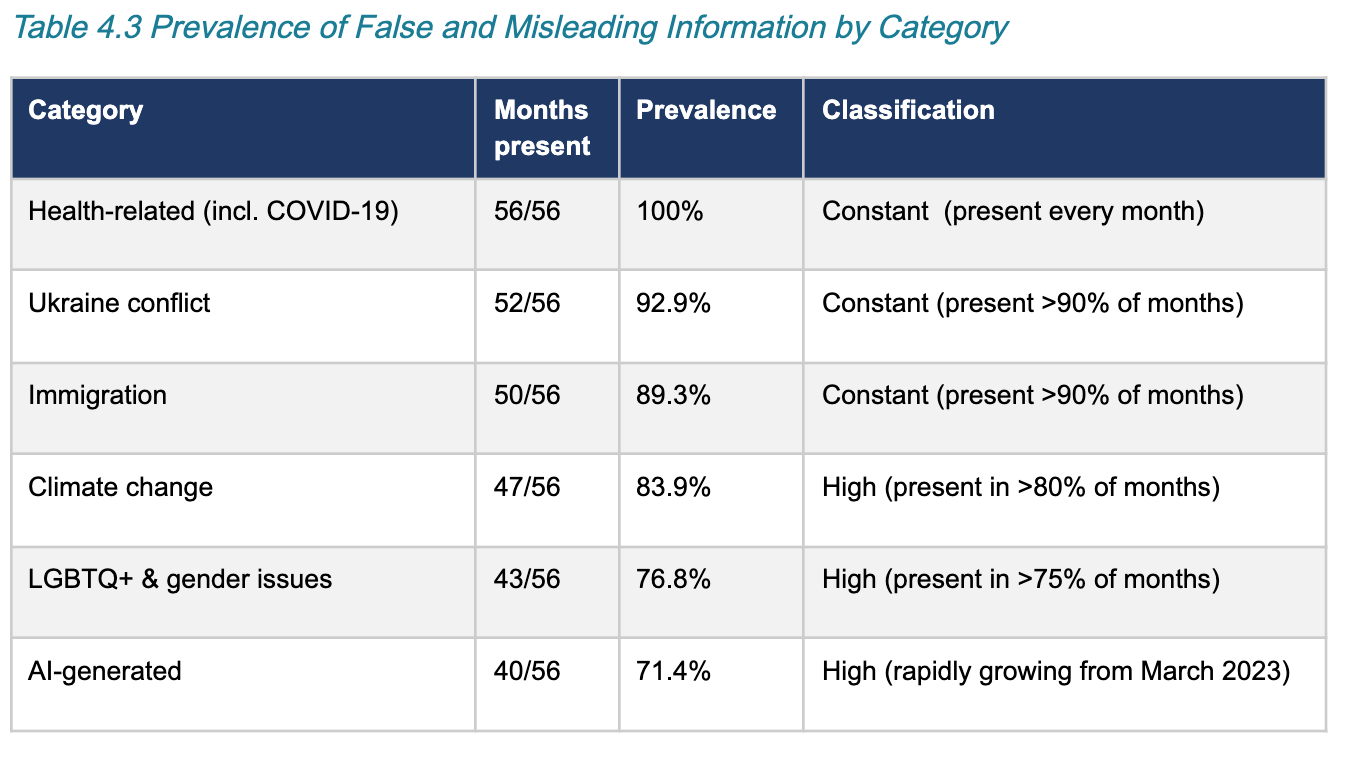
This framing turns high-frequency public debate on gender and immigration into evidence of a persistent “misinformation” problem requiring state attention.
The report also places particular emphasis on individual-level harms, especially those linked to health. It states: “Vaccine hesitancy represents one of the most extensively documented individual-level harms. The WHO named vaccine hesitancy one of the top ten threats to global health in 2019 (Löffler, 2021). Zhao et al. (2023), synthesising 91 observational and 11 interventional studies, found that COVID-19 vaccine misinformation prevalence ranged from 2.5% to 55.4% in the general population, rising to 6.0% to 96.7% among vaccine-hesitant groups, illustrating how misinformation exposure concentrates among already-vulnerable populations.”
This framing continues the pandemic-era approach of treating scepticism or dissent on medical interventions as a primary public-health threat, even as the report itself notes that false and misleading content has now expanded far beyond COVID-19.
It structures the issue of false and misleading information around three main pillars, as shown in its own evidence map.
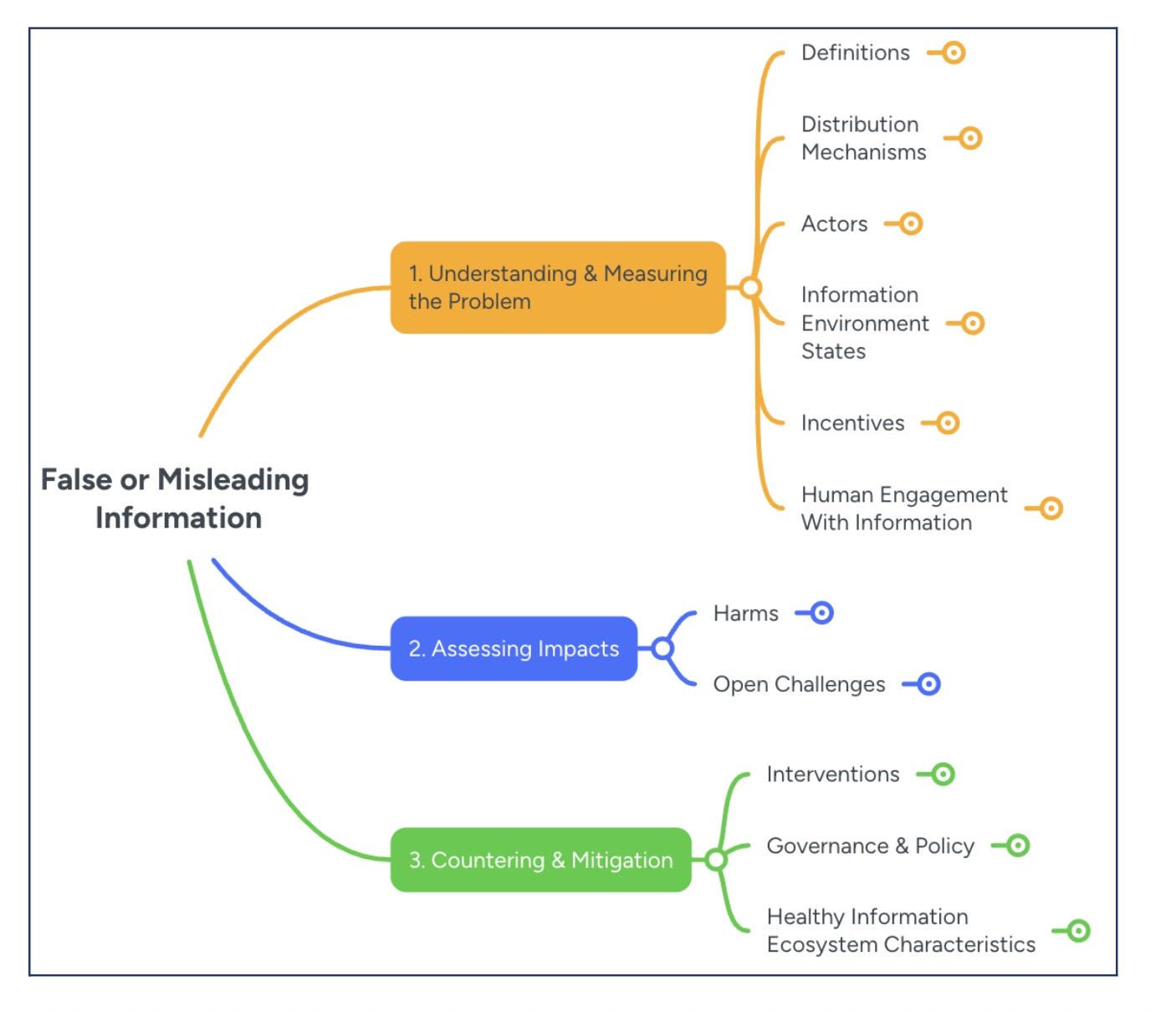
Source: Evidence map from False and Misleading Information: An Evidence Summary and Map for Policy and Practice (May 2026).
The recent Government report is not neutral science. It is a selective, ideologically loaded framework that reframes legitimate debate as a “systemic national risk.” The authors call for new “statutory frameworks,” greater monitoring, and a shift toward policing effects rather than intent. “11 experts working in the field of false and misleading information” reviewed the report beforehand. However, none appear to have challenged its alarmist assumptions or its willingness to draw on research from non-governmental organisations (NGOs) such as the infamous Center for Countering Digital Hate (CCDH).
CCDH: The NGO That Specialises in Weaponising “Hate” and “Misinformation”
CCDH presents itself as a non-partisan fighter against online hate and disinformation. In reality, it has a documented history of producing flawed, high-impact reports that pressure platforms into deplatforming dissenters, often with political connections that should raise alarm bells.
Co-founded with involvement from Morgan McSweeney, CCDH has deep Labour ties. McSweeney, a longtime Labour strategist who later became Sir Keir Starmer’s chief of staff, served as a founding director of CCDH. The organisation has also shared a London address with Labour Together, the influential group McSweeney previously directed.
In February 2026, McSweeney resigned from his role as Sir Keir’s chief of staff after taking “full responsibility” for advising the appointment of Peter Mandelson as UK ambassador to the United States. Mandelson was later removed from the post once the depth of his links to the Jeffrey Epstein (the American financier and convicted sex offender who ran a sex-trafficking network involving underage girls) became clearer.
The CCDH has long focused on branding critics of official narratives as dangerous. Its infamous 2021 “Disinformation Dozen” report claimed a tiny group of individuals , including RFK Jr., produced the bulk of “anti-vaxx” content online.

Notably, Meta’s own subsequent audit found the true figure was orders of magnitude lower, a 1,300-fold exaggeration. That report nevertheless helped trigger mass deplatforming, White House rhetoric about people “killing” others with speech, and even domestic terrorism framing by US authorities.
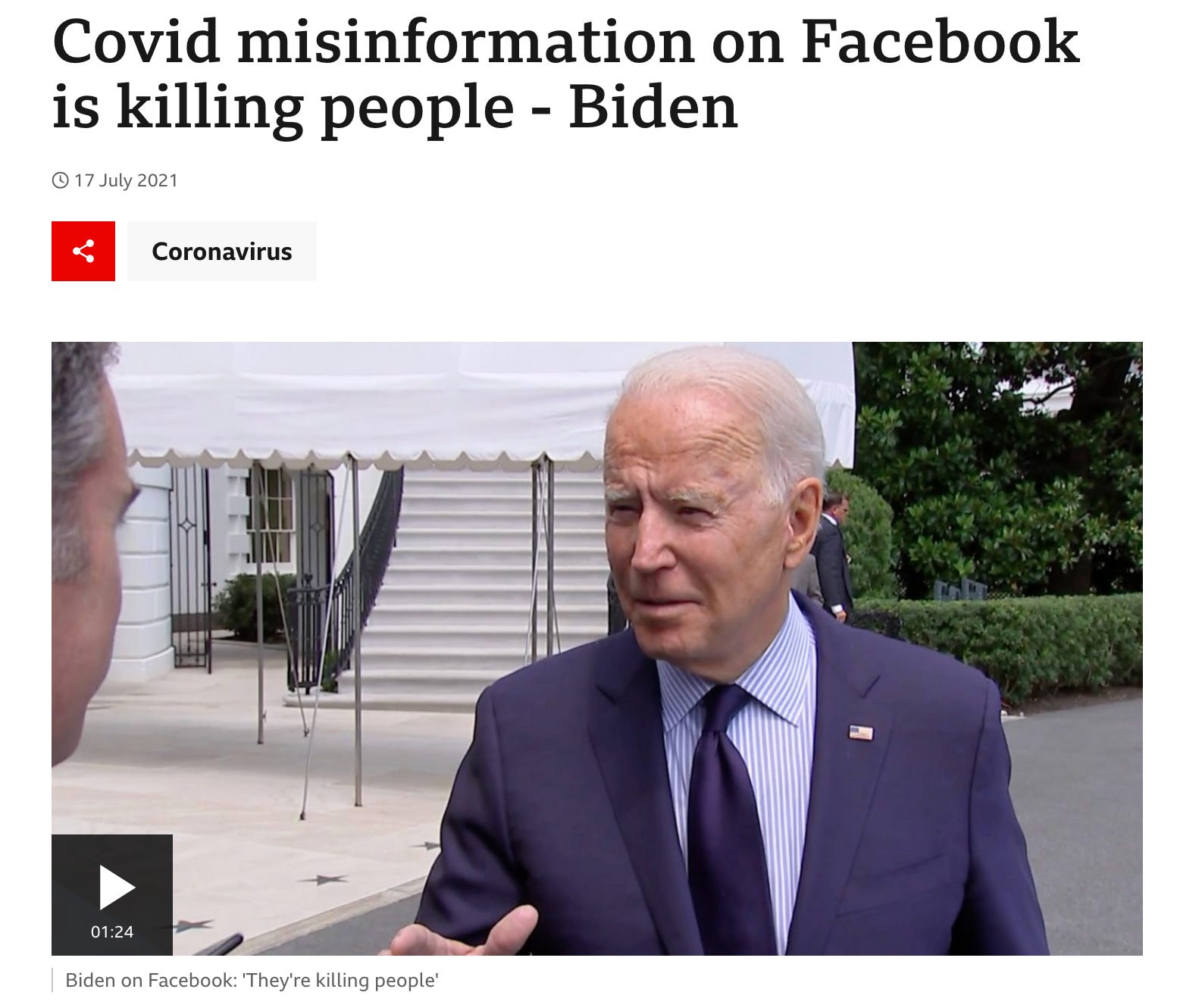
Source: BBC News
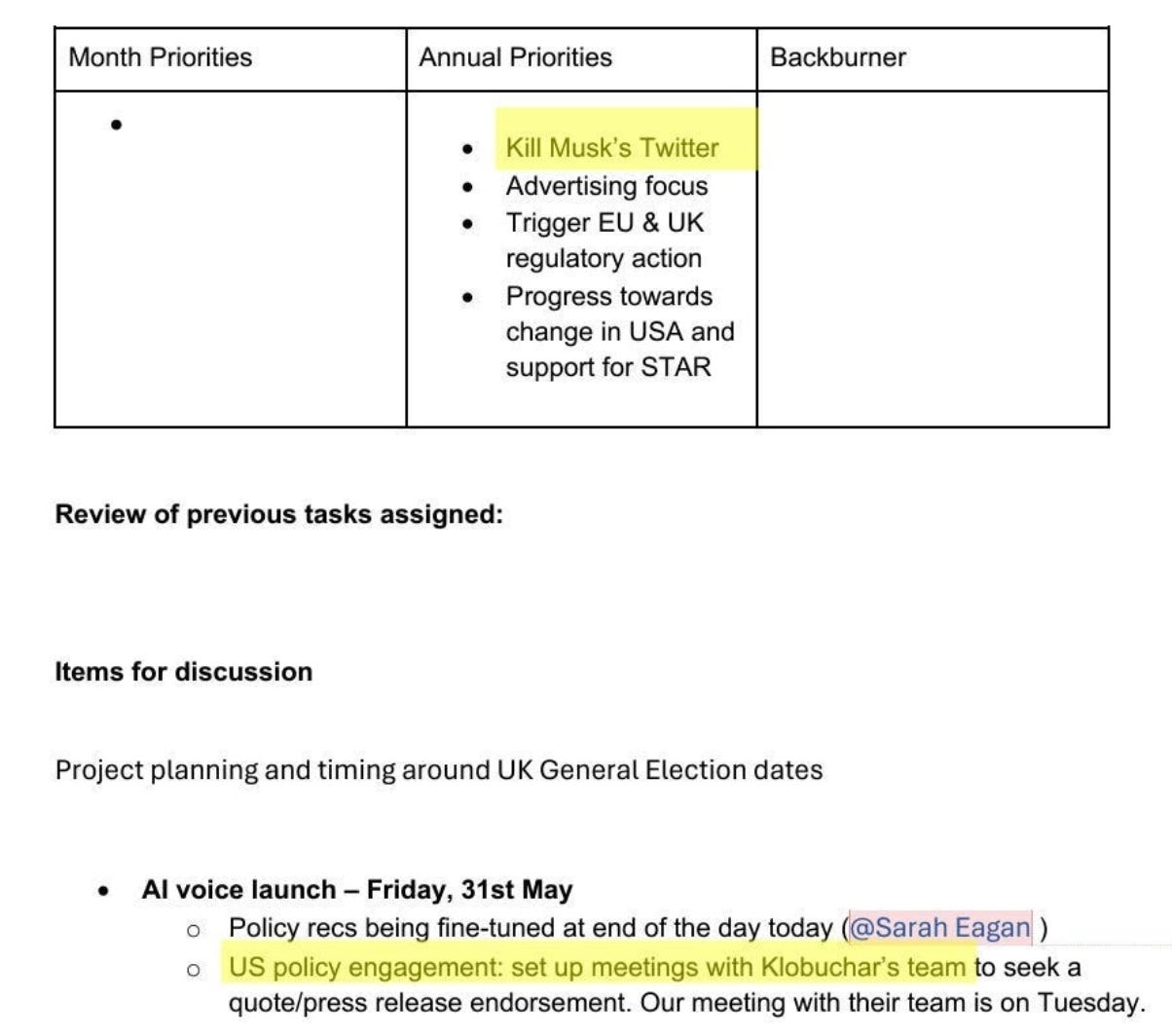
Leaked internal documents later revealed CCDH’s strategic priority of “Kill Musk’s Twitter,” shorthand for campaigns to starve X of advertising revenue and pressure regulators.
CCDH has openly taken credit for its role in shaping major online regulation. In a January 2024 blog post titled “Our campaigning resulted in the Online Safety Act in the UK,” the organisation stated that it campaigned for the legislation from the beginning and that its CEO Imran Ahmed was the first witness to the parliamentary pre-legislative committee. CCDH has also been active in advocacy around the European Union’s Digital Services Act (DSA), focusing on its implementation and enforcement.
Inoculating against dissent
Notably, the government report strongly endorses “prebunking,” describing it as a “first line of defence.” Table 6.3 (shown below) defines it as:
“Proactively building cognitive resistance before exposure to false and misleading information by using weakened forms of misleading arguments, alongside preemptive refutations or clear guidance on how to identify propaganda.”
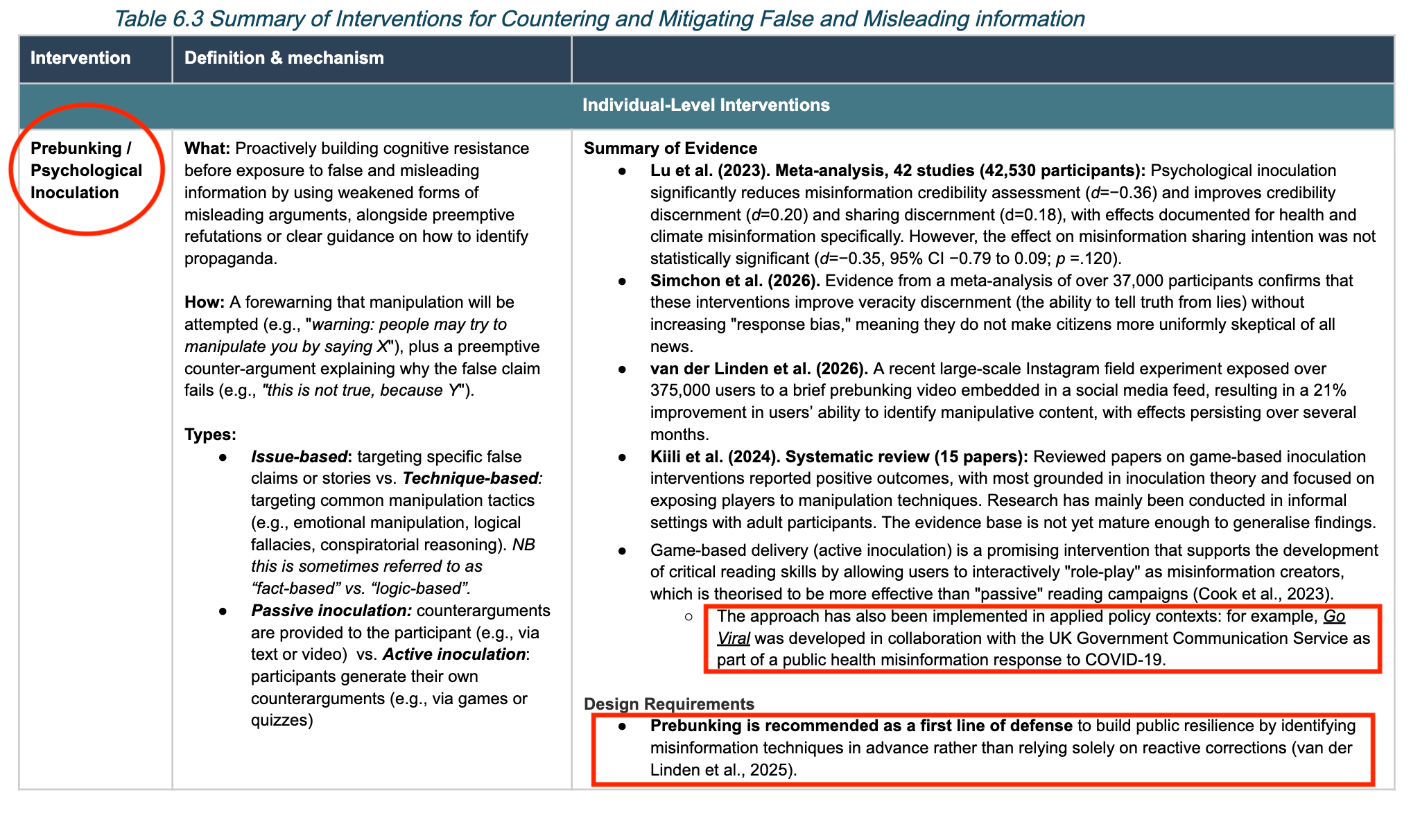
It elaborates that this typically involves a forewarning that manipulation will be attempted, plus a preemptive counter-argument. The report presents both “passive” and “active” forms of psychological inoculation and cites multiple meta-analyses claiming positive effects.
Of particular note is the report’s reference to Go Viral, a game-based inoculation tool that was “developed in collaboration with the UK Government Communication Service as part of a public health misinformation response to COVID-19.” This is the same psychological inoculation approach, including the Go Viral game itself, I examined in detail in my earlier investigation, NATO’s Mind “Games”—Inoculating Dissent? My report detailed how NATO and aligned institutions have long promoted “inoculating” the public against narratives they classify as misinformation.
What began as a strategic communications and military-influenced technique for “inoculating” populations against inconvenient narratives has now been formally recommended in a UK government evidence review as domestic policy, complete with calls for “booster” interventions to maintain its effects.
The Pattern Continues
This is all part of a broader and disturbing shift towards institutionalised censorship and narrative control. Just recently, Culture Secretary Lisa Nandy’s green paper Watch This Space proposes forcing social media platforms to prioritise “trustworthy” news sources, explicitly naming the BBC, ITV and Channel 4. In practice, this would hand the state greater influence over which media organisations are amplified and which are marginalised.
What we are seeing in the Government’s latest “evidence review” is not a new phenomenon. It is the institutionalisation of a playbook that has been refined over several years: activist research laundered through official channels, selective definitions of harm, and the steady expansion of state and NGO power over the information space. It is the same machinery of censorship that accelerated after March 11, 2020, which I document in 3/11 Viral Takeover.
When the state decides in advance which observations about biology, migration, elections, or public health constitute “harmful misinformation,” the result is not social cohesion. It is enforced orthodoxy, deep public distrust, and the disturbing criminalisation of dissent.
If this investigative reporting matters to you, please consider a paid subscription or buy me a coffee! Your support makes this work possible.
So important topic - great to see you still on it!
Academic prostitutes on full shameless display