

"Stay Home, Protect the NHS" May Have Cost Lives: Inquiry Stops Short – My Book Exposes the Full Truth

The UK Covid Inquiry’s latest official finding, delivered in Baroness Hallett’s Module 3 report on 19 March 2026, has finally put on record what so many of us shouted from the rooftops and were often censored for saying. The government’s “Stay Home, Protect the NHS, Save Lives” slogan did not just fail. It actively contributed to avoidable harm and deaths.

Yet the inquiry itself is strikingly cautious in its wording. The report never states outright that the slogan “cost lives” or “may have cost lives.” Instead, it uses measured, hedged language: “This suggests that the public messaging of Stay Home, Protect the NHS, Save Lives may have, inadvertently, sent the message that healthcare was closed.”
It notes that people were deterred from accessing care due to the slogan, fear of catching Covid in healthcare settings, or reluctance to burden the NHS. This resulted in plummeting non-Covid attendances, delayed diagnoses, increased ill-health and suffering, and risks of deterioration or death in some cases.
The Telegraph, however, went one step further in its headline and framing: “Covid stay-at-home order may have cost lives, inquiry finds.”
It highlights the relentless messaging, crafted by Cabinet Office officials, which conveyed that the NHS was effectively closed or too dangerous to use. People stayed away from A&E even for heart attacks, strokes and cancer symptoms. Non-Covid hospital attendances plummeted, diagnoses were delayed, and avoidable deaths mounted from other causes.
The report also condemns the harsh visiting restrictions that left dying patients isolated from their families, causing deep and lasting trauma. Most starkly, the inquiry addresses the scandal of the blanket DNACPR notices imposed on vulnerable groups: older people, those with learning disabilities, without proper individual assessment or family consultation. It states plainly that this “should not have happened.”
All these findings arrive six years too late, but they vindicate the forensic account I laid out in my book 3/11: Viral Takeover, particularly in Chapter 5: Locking Down Harms.
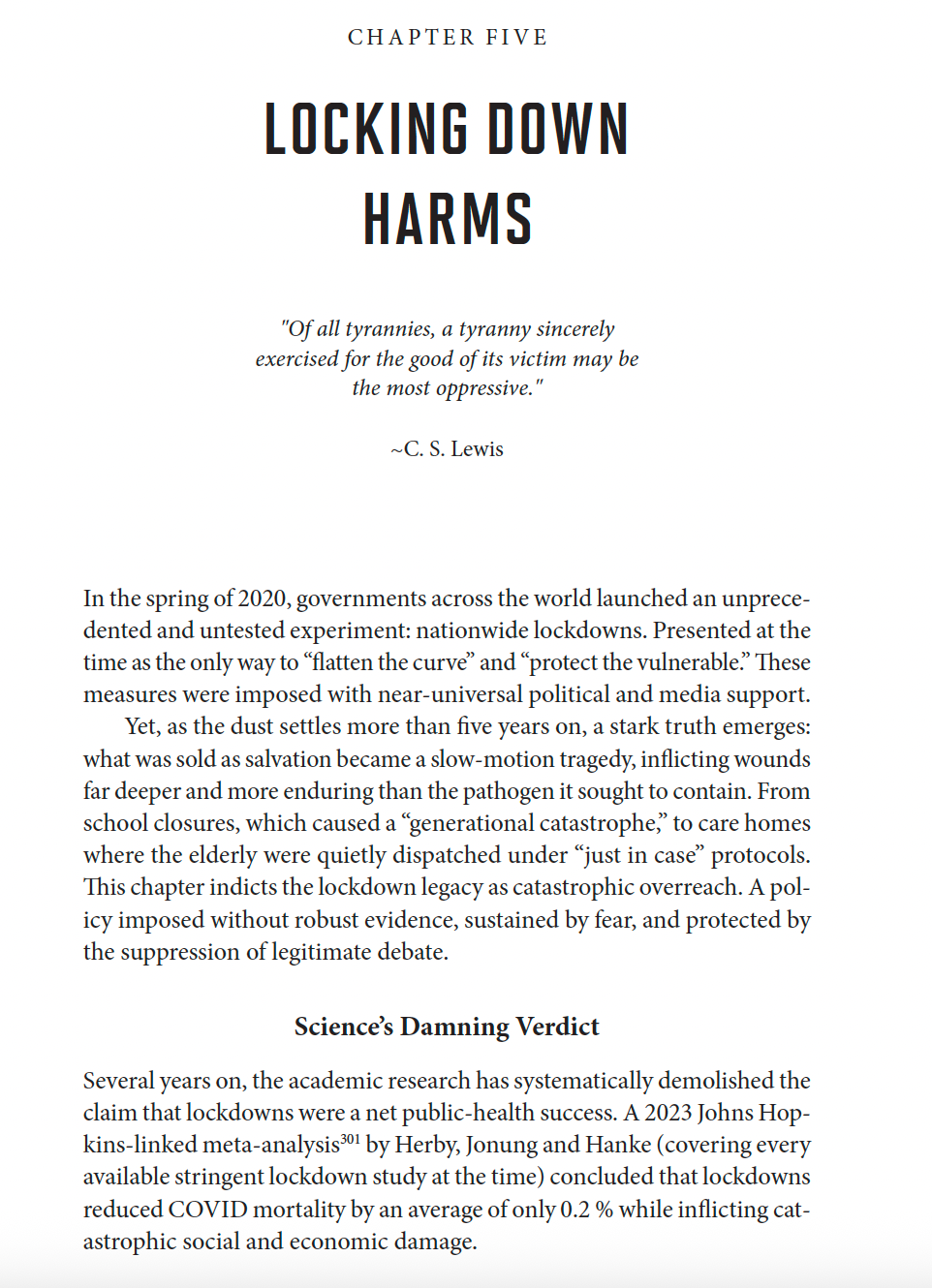
That chapter moves beyond abstract policy critique to confront the human cost: the silent suffering, the shattered lives, the “ethical blackouts” that lockdowns created and normalised. I humanise the statistics with personal stories, whistleblower testimony and official data to show the real, often irreversible damage inflicted on ordinary people.
Here are the key realities the chapter documents, now echoed (belatedly) by the inquiry:
Excess non-Covid deaths and untreated illnesses. Lockdowns and the “Protect the NHS” campaign deterred people from seeking timely care for cancer, heart attacks, strokes, and other serious conditions. The result was thousands of avoidable deaths from causes unrelated to the virus, exactly the healthcare avoidance the inquiry now confirms.
Mental health crisis and suicides. Spikes in suicides, severe depression, anxiety, and domestic abuse hit the young, the elderly, and the isolated hardest. Behavioural-science units and fear-amplified messaging from SAGE and the Behavioural Insights Team deliberately escalated terror to drive compliance, worsening the psychological fallout.
Learning loss and impacts on children. School closures caused massive educational disruption, developmental delays, increased child poverty, and long-term harm to mental and physical health. Entire generations bear scars from enforced social isolation.
Care home catastrophe and end-of-life abuses. The chapter details the silent deaths in care homes, the cruelty of visiting bans that robbed families of final moments with loved ones, and the blanket DNACPR notices applied to vulnerable groups without proper consultation. These were precisely the discriminatory practices the inquiry now calls unacceptable: outcomes of resource panic, fear-based protocols, and a system that prioritised biosecurity over basic humanity.
At the heart of the chapter is the concept of “ethical blackouts”: a moral detachment where policymakers, healthcare systems and society normalised extreme measures, downplayed foreseeable harms, and failed to recognise or address the devastation in real time. The inquiry’s admissions on DNACPR, visiting restrictions and messaging failures are partial acknowledgements of this blackout but my book shows how it was engineered from the start through weaponised fear, narrative control and the sidelining of dissent.
In the words of Jeffrey Tucker, founder of the Brownstone Institute and author of the book’s foreword: “The book is five years in the writing and includes a level of documentation that will amaze you…The result is a book for the ages, one that will end the whitewashing that is taking place right now. Indeed, the appearance of 3/11: Viral Takeover becomes on its publication date the most exhaustive and authoritative account of the UK experience to appear in print. It will likely be years before it is surpassed if it ever will be.”

Congratulations on your book! 🙌
Well done!