Book Review: 3/11 Viral Takeover
Here’s a thoughtful review of my book 3/11 Viral Takeover from the Bioregulatory Medicine Institute.
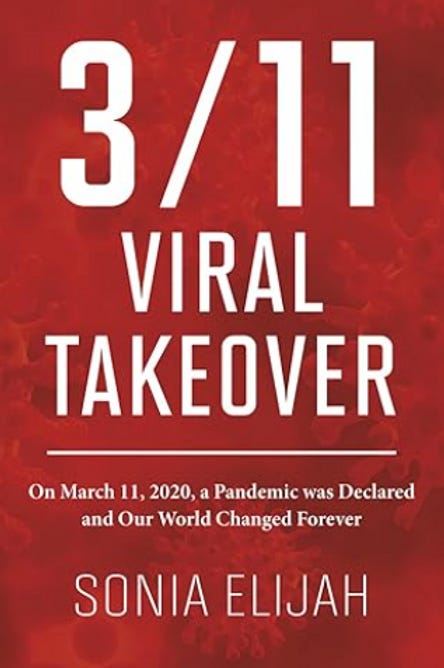
There are books that comfort, books that entertain, and books that disturb — in the most necessary way. Sonia Elijah’s debut, 3/11: Viral Takeover, belongs firmly in the third category. Released on the sixth anniversary of the date that gives it its title, this is an ambitious, forensically researched account of what Elijah argues was not simply a public health emergency, but a civilizational turning point.
The title is deliberate. Elijah frames March 11, 2020 as “3/11”: a biological sequel to “9/11,” where the earlier event gave rise to mass surveillance and endless war, and this one ushered in what she characterizes as an age of biosecurity management, censorship, and algorithmic control. It’s a provocative thesis, and the book does not shy away from its implications.
The Author and Her Method
Elijah is an independent investigative journalist and former BBC researcher with a background in economics, renowned for her forensic-style reporting into the COVID-19 response, including detailed analyses of Pfizer-BioNTech clinical trial documents, vaccine safety concerns, regulatory failures, and institutional conflicts of interest. 3/11: Viral Takeover is the culmination of five years of that work, and it shows in both the depth of sourcing and the clear sense of moral purpose driving every chapter.
What the Book Covers
The investigation begins with the early suppression of alternative views and the influential papers that locked in the natural-origin story amid growing lab-related concerns. It reveals how unelected scientists and pharma-linked philanthropies took control of policy, while a single deeply flawed epidemiological model drove global lockdowns in lockstep, inflicting catastrophic harms through school closures, care-home neglect, and suppressed ethics.
Elijah also uncovers an unvalidated PCR protocol she argues became a multi-billion-dollar engine perpetuating lockdowns, traces mRNA technology’s rapid rise despite longstanding safety hurdles, documents the suppression of treatments like ivermectin and hydroxychloroquine, and delivers deep dives into Pfizer’s clinical trial data and post-authorization adverse event reports. One particularly striking example involves a myocarditis study: Elijah documents how a published study examining myocarditis risk in younger males was forcibly withdrawn just days before an FDA vote on authorizing the Pfizer vaccine for children ages 5 to 11.
Approach and Perspective
The book’s most compelling attribute lies in its evidentiary ambition. Drawing on thousands of pages of FOIA documents, leaked emails, scientific papers, and whistleblower interviews, Sonia Elijah offers a detailed examination of how unelected scientists, intelligence-linked philanthropies, and regulatory bodies contributed to shaping the official narrative. For readers who value primary source material, this depth of documentation is likely to be particularly engaging.
At the same time, the author’s perspective is clearly defined. The narrative leans toward advocacy, with less emphasis placed on exploring counterarguments or the public health rationale behind many of the decisions discussed. Readers seeking a more fully rounded analysis may benefit from engaging with additional sources alongside this work.
Why It Still Matters
Whatever one’s priors about the pandemic, the questions Sonia Elijah raises—about regulatory processes under emergency conditions, philanthropic influence on public health, suppressed research, and the consolidation of institutional authority—are legitimate concerns. 3/11: Viral Takeover presents one of the most comprehensive document-based inquiries into these issues to date. It is a substantive and at times disquieting work that rewards thoughtful engagement and measured reflection. How these issues are engaged in the years ahead may prove pivotal in shaping both future public health policy and the integrity of the institutions entrusted with it.
3/11 Viral Takeover is available in Kindle eBook, paperback, and hardcover.


"philanthropic influence'. I would also suggest "genocidal influence". Its not just a lockdown battle, its for our very lives. My 2021 article "Why are they Killing us?" explains why.
Is book available outside of Mr Global's Amazon?